With medical science and technology advancing at an increasingly rapid rate, it is more important than ever that doctors, nurses, and support staff stay up to date with continuing medical education. Continuing medical education (CME) can refer to educational activities which help to maintain and increase the knowledge, skills, and professional performance of medical health professionals. This can be in the form of formal courses, seminars, lectures, online classes, and workshops.
In this article, we examine the evolution of CME and current CME trends, investigating the shortcomings of the current methods and overcoming them by leveraging technologies such as telehealth cameras.
The Evolution of CME Delivery Methods
Over the years, CME has evolved from traditional, in-person lecture-based formats to dynamic, technology-enhanced learning experiences. Studies have shown live media to be more effective than print and multimedia formats more effective than single-media formats.
The ongoing advancement of educational research and technologies paves the way for more innovative and interactive delivery methods, including:
Interactive online courses
Webinars
Multimedia content
Virtual simulations
Virtual reality (VR) and augmented reality (AR)
The Challenges for Medical Professionals
Despite the aforementioned advancements in CME, significant challenges in continuing medical education remain for medical professionals, highlighting the ongoing need for improvements to ensure and sustain physician competency and performance.
Professional Practice Gaps
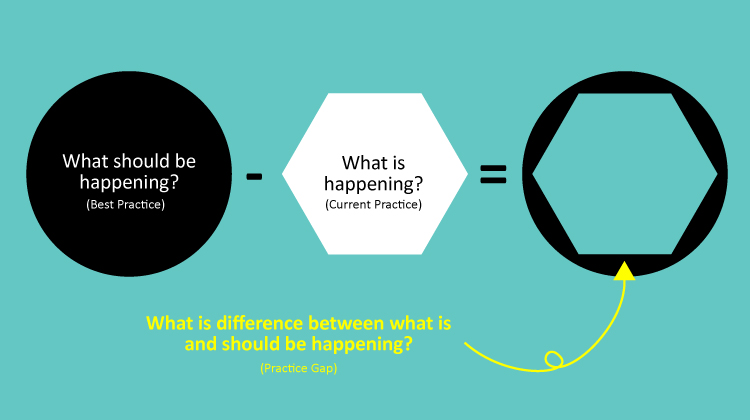
According to the ACCME, a professional practice gap is defined as the “difference between current health care processes or outcomes observed in practice, and those potentially achievable on the basis of current professional knowledge”.
A practice gap can be categorized into one or more of the following types:
Knowledge (does not know)
Skill (does not know how)
Practice (does not do)
Through performing gap analyses, medical professionals can effectively understand and begin to reduce the practice gap through CME, enabling the identification of areas for improvement and ultimately the achievement of improved patient care and safety.
Barriers to CME
Aside from practice gaps, medical professionals face many barriers to accessing Continuing Medical Education (CME). A 2021 survey with US clinicians indicates that expenses and travel time are the main barriers to CME, with 68% citing costs and 57% highlighting travel time as a significant concern.
With the existing barriers, medical professionals might be restricted from accessing the educational resources they need, thereby limiting their physician competency and performance.
“We should explore options that reduce barriers of time and money, and creatively use online tools to publicize new offerings.”
Bridging the Gap in CME with Telehealth Cameras
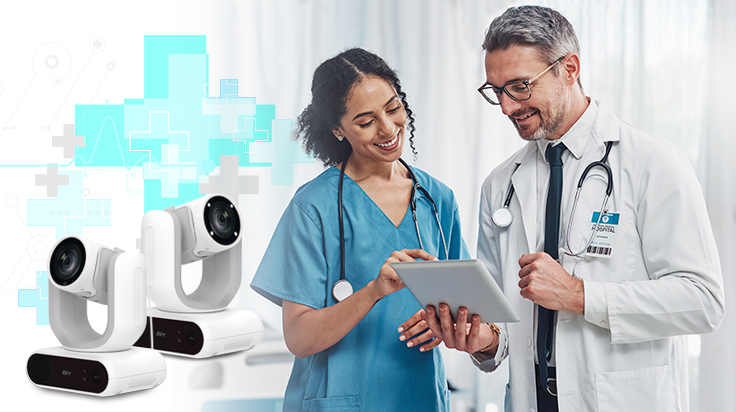
To solve the issues that medical practitioners face, CME has been moving online to improve accessibility, relying heavily on commercial general-use devices such as smart glasses and video conferencing cameras to satisfy the extensive demand for recording or streaming CME content. Medical professionals found several notable disadvantages when using these devices, including unstable image quality, the need for an additional audio device, and the inability to zoom in and capture the intended view. These limitations restricted the delivery of educational content.
When the pandemic struck, telehealth cameras were suddenly thrust to the forefront of the medical industry. Having undergone significant technological upgrades, telehealth cameras are being integrated into CME, most notably its use in surgical live-streaming, marking a pivotal shift in how medical education is delivered.
Applications of telehealth cameras in CME now include:
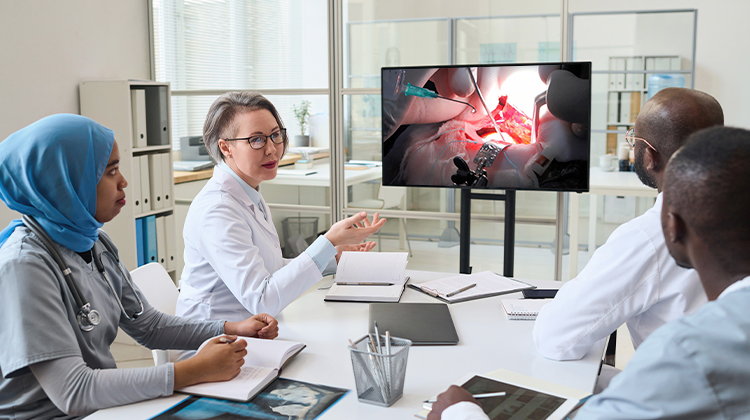
Live Surgical Demonstrations – Telehealth cameras can stream live surgeries and procedures through high-quality video, allowing learners to observe techniques and ask questions in real time, providing a first-hand learning experience.
Recorded Sessions for On-Demand or Online Learning – Telehealth cameras can record educational sessions with high image quality, making them available for on-demand or online viewing. This supports self-paced learning and revisiting complex topics.
Remote Workshops and Training – They enable the conduct of interactive workshops such as medical simulation training where participants can practice clinical skills under the guidance of experts, even from remote locations.
About the Author
Emily Lee is a Brand Communication Strategist at AVer Information, working out of Taipei, Taiwan. She crafts press releases, blog posts, and other marketing materials to support AVer’s global branding efforts.
With the increasing maturity and popularity of PACS technology, as well as the rapid development of various digital imaging equipment such as DR, CR, multi-row CT, 3D image, the selection and configuration of medical display has become the focus of attention of hospitals and PACS integrators
The Jusha CP610 Portable Medical Monitor YOUR BUTTLER FOR PORTABLE DIAGNOSIS.
Jusha CP610 is a 6MP portable medical grade monitor for when doctors stay at home or are out and about and need a mobile solution.
Accurate medical images can displa
Jusha Medical is a global medical high-tech enterprise founded in 1996. The headquarters is located in Nanjing, PRC. Its high-tech industrial park is situated in Nanjing Jiangbei New Area. It governs two wholly-owned companies (each managing one wholly-owned subsidiary) and one holding company. Jusha Medical mainly engages in the R&D,...
Along the Mersey, sea breeze over Liverpool opened the UKIO. From July 4 to 6, 2022, more than 120 exhibitors and more than 2,000 exhibitors from all over the world gathered in Liverpool to participate in the largest multidisciplinary imaging, oncology and radiology event in the UK. All the exhibitors...