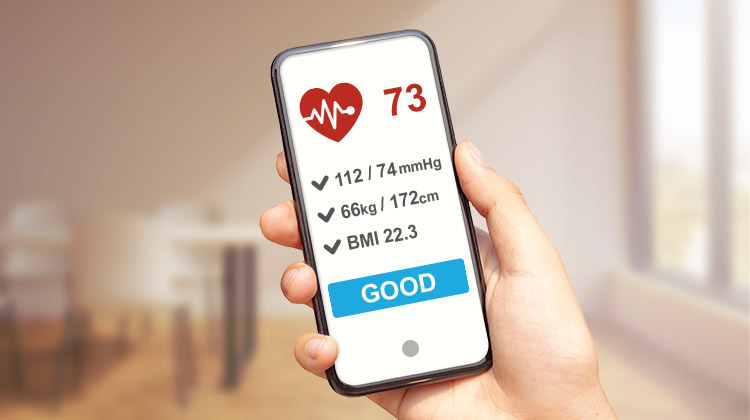
We have covered both Telemedicine and Telehealth in our previous AVer Experts, but we still haven’t introduced a term that has been increasingly used in recent years, and that is “Connected Health”. At the moment, there is no standard or universally accepted definition of what Connected Health is; however, a commonly referenced definition was given by researchers Caulfield and Donnelly, in which they stated that “Connected Health encompasses terms such as wireless, digital, electronic, mobile, and telehealth and refers to a conceptual model for health management where devices, services or interventions are designed around the patient’s needs, and health-related data is shared, in such a way that the patient can receive care in the most proactive and efficient manner possible.” In other words, it can be seen as an umbrella term for concepts such as telehealth, telemedicine, mobile health (mHealth), and more. It can also be defined as connecting every stakeholder, whether it be doctors, nurses, or patients, through various technologies and means of sharing information in regard to the patient’s status and well-being.
With how rapid information and communication technologies are advancing, there is a paradigm shift in the healthcare industry, suggesting that predictive and pre-emptive healthcare solutions should not only be personalized but also pervasive. While there are a lot of topics that we can tackle regarding Connected Health, we will start off with the basics for today as an introduction to this new model of healthcare delivery that is enabled by technology.
Why is Connected Health Important?
To understand what Connected Health is, it’d be better to start by knowing its essential concept first. Connected Health is thought to be a more proactive model of healthcare delivery compared to its more traditional counterparts in the sense that medical technologies and services are designed around the patient’s needs. What this means is that it puts the patient at the center of the entire process, regardless of their location or circumstances. In doing so, Connected Health, or more specifically the tools of Connected Health, has the potential to not only empower clinicians with more efficient and up-to-date data but also encourage patient engagement by providing them with key information at the tip of their fingertips. Connected Health is also especially relevant today because of the ongoing global pandemic. Due to Covid-19, many healthcare deliveries are affected, causing patient management to be difficult to maintain. As such, Connected Health is becoming an indispensable source of these issues, especially for patients with the coronavirus or chronic illness that require routine follow-ups and monitoring. What’s more, is that evidence from meta-analyses and systemic reviews have already been reported to support this claim.
Enhancing Patients and Healthcare Experience
Aside from its relevance, Connected Health is also helpful in improving patient care and overall patient experience. As you’d probably guess, this is mostly achieved via the tools of Connected Health. Currently, the most common tools include mobile healthcare apps, wearable devices, connected medical devices, interoperable medical ICT systems, and remote patient monitoring technologies. Through these tools, the patient’s needs, and health status can be constantly monitored across different clinical settings, leading to earlier interventions and fewer possibilities of adverse events. Additionally, wearable devices and mobile apps can also help identify individuals that are at risk by monitoring their vital signs and symptoms in real-time. This information can then be shared with the healthcare professionals, allowing them to deliver preventative care in a proactive and timely manner. To top it off, patients having access to their health status also allows them to feel more in control, which in turn increases their self-efficacy and satisfaction.
While there is definitely room for growth and improvement in the future, Connected Health is undoubtedly a dynamic and fast moving area of digital health that holds the potential to transform healthcare for the better. Last Updated: June 21, 2024
About the Author
Stephanie Pan is a Brand Communication Strategist at AVer Information, working out of Taipei, Taiwan. She crafts press releases, blog posts, and other marketing materials to support AVer’s global branding efforts.
With the increasing maturity and popularity of PACS technology, as well as the rapid development of various digital imaging equipment such as DR, CR, multi-row CT, 3D image, the selection and configuration of medical display has become the focus of attention of hospitals and PACS integrators
The Jusha CP610 Portable Medical Monitor YOUR BUTTLER FOR PORTABLE DIAGNOSIS.
Jusha CP610 is a 6MP portable medical grade monitor for when doctors stay at home or are out and about and need a mobile solution.
Accurate medical images can displa
Jusha Medical is a global medical high-tech enterprise founded in 1996. The headquarters is located in Nanjing, PRC. Its high-tech industrial park is situated in Nanjing Jiangbei New Area. It governs two wholly-owned companies (each managing one wholly-owned subsidiary) and one holding company. Jusha Medical mainly engages in the R&D,...
Along the Mersey, sea breeze over Liverpool opened the UKIO. From July 4 to 6, 2022, more than 120 exhibitors and more than 2,000 exhibitors from all over the world gathered in Liverpool to participate in the largest multidisciplinary imaging, oncology and radiology event in the UK. All the exhibitors...