Remote connectivity is changing just about every aspect of the world as we know it. Entire companies are switching to a WFH model, schools are going hybrid, and live entertainment is moving to Zoom. Even hospitals are getting into the video conferencing game, expanding the reach of quality health care to include unreached segments of the global population with what’s known as telemedicine.
While you’ve probably heard the term telemedicine bandied about in the media and online, there’s a lot to unpack when it comes to understanding what exactly it is. So, let’s start unpacking!
Telemedicine: What Is It?
A quick Google search will yield many definitions of telemedicine. We’re going to cut through the noise and take you right to the World Health Organization’s definition:
“The delivery of health care services, where distance is a critical factor, by all health care professionals using information and communication technologies for the exchange of valid information for diagnosis, treatment and prevention of disease and injuries, research and evaluation, and for the continuing education of health care providers, all in the interests of advancing the health of individuals and their communities.”
In plainer terms, telemedicine takes place when physicians diagnose and treat patients who can’t be physically present or when technology is used to advance medical knowledge.
Technology Needed for Telemedicine
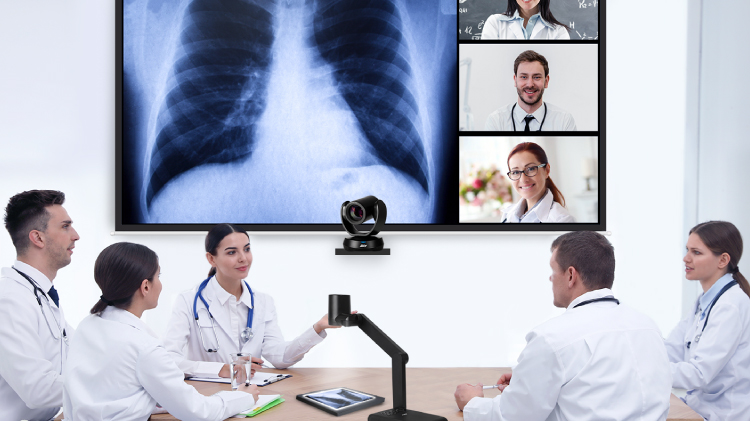
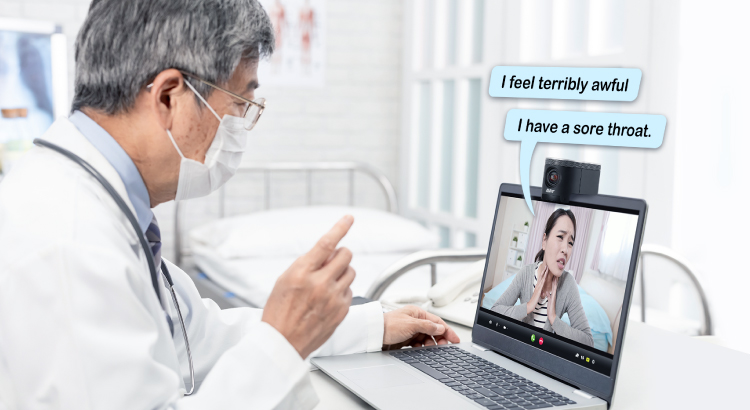
Telemedicine could be as simple as a doctor discussing internal symptoms and viewing pictures of visible outbreaks with a patient on a Zoom call. Also, when a hospital has limited resources, physicians can gather data and take X-rays to send to a specialist at another hospital for evaluation. In some cases, patients use basic medical technology at home to supply data that helps doctors diagnose them. Telemedicine also includes devices used to broadcast and record surgeries for evaluation by medical students.
Our focus for now is on devices that let health care providers and their patients communicate with each other at a distance. Here are some types of cameras commonly used for telemedicine:
Video conferencing cameras – These premium-quality cameras give people on both ends of a remote checkup the necessary clarity for diagnosing visible symptoms via up to 4K imaging and high frame rates. Also, wide-angle lenses enable users to use more of their space.
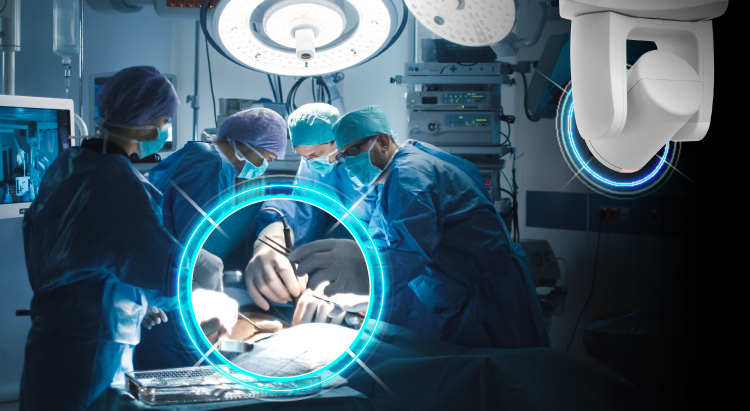
Auto tracking cameras – The latest Pro AV solutions are ideal for delivering telemedicine education. Auto tracking functions follow medical school professors in classrooms or every move of surgeons in operating rooms—and the best options track without requiring targets to wear any extra devices.
Visualizers (document cameras) – Doctors can use a visualizer’s high-level optical zoom to look into medical samples with a microscope, evaluate an X-ray with a lightbox, and examine wounds. The visualizer can also capture images or record videos of the examination process.
It’s important to use premium cameras for telemedicine so you can maintain professionalism and deliver the most accurate results possible.
As technology progresses, expect to see telemedicine capability and availability expand. Click the button below to browse the camera technology you’ll need to get started!
Aaron Case is a Brand Communication Strategist at AVer Information, working out of Taipei, Taiwan. He crafts press releases, blog posts, and other marketing materials to support AVer’s global branding efforts.
With the increasing maturity and popularity of PACS technology, as well as the rapid development of various digital imaging equipment such as DR, CR, multi-row CT, 3D image, the selection and configuration of medical display has become the focus of attention of hospitals and PACS integrators
The Jusha CP610 Portable Medical Monitor YOUR BUTTLER FOR PORTABLE DIAGNOSIS.
Jusha CP610 is a 6MP portable medical grade monitor for when doctors stay at home or are out and about and need a mobile solution.
Accurate medical images can displa
Jusha Medical is a global medical high-tech enterprise founded in 1996. The headquarters is located in Nanjing, PRC. Its high-tech industrial park is situated in Nanjing Jiangbei New Area. It governs two wholly-owned companies (each managing one wholly-owned subsidiary) and one holding company. Jusha Medical mainly engages in the R&D,...
Along the Mersey, sea breeze over Liverpool opened the UKIO. From July 4 to 6, 2022, more than 120 exhibitors and more than 2,000 exhibitors from all over the world gathered in Liverpool to participate in the largest multidisciplinary imaging, oncology and radiology event in the UK. All the exhibitors...